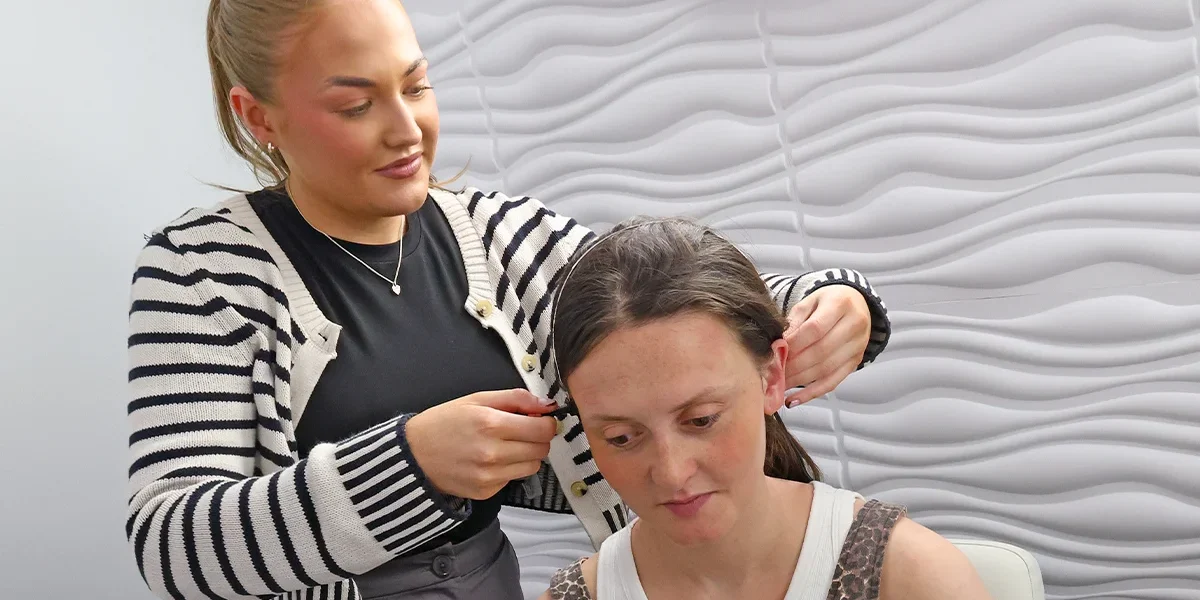

Sophie Halliday is a qualified audiologist with clinical experience in NHS and private audiology settings
Your Complete Guide to Hearing Tests
What to expect, how audiology tests work, and how to find a hearing test near you, explained by a qualified audiologist.
Quick answer
A hearing test is a professional audiology assessment that measures how well you hear different pitches and volumes. It usually includes a conversation about your symptoms, an examination of your ears, pure tone audiometry, speech testing, middle ear checks and a plain English explanation of your audiogram. A full appointment typically takes 45 minutes to one hour.
Medical safety note
This article is for general information and does not replace an individual assessment with a qualified audiologist, GP or ENT specialist. If you experience sudden hearing loss, hearing loss in one ear, ear pain, discharge, new severe tinnitus, dizziness or facial weakness, seek urgent medical advice rather than waiting for a routine hearing test.
What Is a Hearing Test and Why Does It Matter?
Most people visit an audiologist for the first time long after they should have. That is not a criticism. Hearing loss tends to creep up quietly, and it is surprisingly easy to adapt without realising quite how much you are missing.
You start sitting closer to the television. You ask colleagues to repeat themselves more often. You stop going to noisy restaurants because conversation there has become exhausting rather than enjoyable.
A hearing test, also called an audiological assessment or audiology test, is a structured set of measurements that establishes precisely how well you hear across a range of frequencies and volumes.
It is carried out by a qualified audiologist in a controlled, sound treated environment and produces a lasting clinical record called an audiogram. That record guides every decision that follows: whether to monitor, treat or refer.
What a hearing test is not is an online quiz. Web based screeners have their place as a nudge to seek professional advice, but they cannot examine your ear canal, measure middle ear pressure, or tell you whether you need a hearing aid or simply need earwax removed.
Only a qualified audiologist working with calibrated clinical equipment can do that accurately.
Why early testing matters
Hearing loss identified early is hearing loss managed well. The longer it goes unaddressed, the greater the impact, not only on communication, but on relationships, confidence and long term brain health.
Booking a hearing assessment is not an admission that something is wrong. It is one of the most straightforward things you can do for your overall wellbeing.
Who Should Have a Hearing Test?
The short answer is anyone who has noticed a change in their hearing, at any age. Beyond that, there are some patterns that should prompt a professional assessment sooner rather than later.
Common Signs of Hearing Loss
- Asking people to repeat themselves regularly, particularly in conversation.
- Struggling to follow television dialogue at a volume others find acceptable.
- Difficulty hearing clearly in background noise, including restaurants, open plan offices and busy social settings.
- A sense that people are mumbling, even when others in the room hear them clearly.
- Missing parts of phone conversations or finding calls tiring.
- Difficulty locating where sounds are coming from.
Less Obvious Signs Worth Taking Seriously
- Tinnitus, including ringing, buzzing or humming in one or both ears.
- A feeling of fullness or pressure in the ear.
- Becoming withdrawn in social situations that previously felt comfortable.
- Increased tiredness or mental fatigue after conversations, which can indicate that the brain is working harder to process sound.
Who Is at Increased Risk?
- Adults aged 50 and over.
- Anyone working in, or with a history of working in, noisy environments, including construction, manufacturing, music, aviation or military service.
- Those with a family history of hearing loss.
- People who take medicines known to affect hearing, including some chemotherapy agents, diuretics and high dose aspirin.
- Anyone who has experienced a significant ear infection, trauma or sudden deterioration in hearing.
A note on sudden changes
If your hearing has deteriorated rapidly over hours or a few days in one ear, this is a medical emergency. Sudden sensorineural hearing loss requires urgent assessment, ideally within 24 to 48 hours.
Do not wait for a routine appointment. Contact your GP, call NHS 111 if appropriate, or attend urgent care immediately. Early treatment can significantly affect the outcome.
How a Hearing Test Works
The words audiology appointment can sound clinical and slightly daunting if you have never had one. They should not. A professional hearing assessment is non invasive, painless and often genuinely interesting, particularly when the audiologist explains what the results mean for your day to day life.
Step One: Your Medical and Hearing History
The appointment begins with a conversation. Your audiologist will ask about any specific hearing difficulties you have noticed, how long they have been present, and which situations feel most problematic.
They will also ask about your general health, medicines, work history, noise exposure and family history.
This is not box ticking. Context changes interpretation. An audiologist who knows you have spent 20 years working near heavy machinery will read your results differently from one who does not, and that difference matters clinically.
Step Two: Otoscopy
Before any listening tests begin, the audiologist will examine both ears using an otoscope or video otoscope.
They are checking for earwax, infection, inflammation, discharge, the condition of the eardrum, and any structural concerns.
This step matters because blocked earwax is one of the most common causes of hearing difficulty and one of the most easily resolved. If significant wax is present, it may need to be removed before the hearing test can give accurate results.
Step Three: Pure Tone Audiometry
This is the central test in any hearing assessment. Pure tone audiometry measures your hearing thresholds, meaning the quietest sounds you can detect, across a range of frequencies from 250 Hz up to 8,000 Hz.
This range covers nearly all the frequencies essential for understanding everyday speech.
You sit in a sound treated booth wearing calibrated headphones or soft insert earphones. The audiologist plays a series of clear beeps at different pitches and volumes to each ear separately.
Each time you hear a sound, however faint, you press a response button. There are no right or wrong answers. The test simply measures what your ears can and cannot hear.
Step Four: Bone Conduction Testing
A small vibrating device is placed on the mastoid bone behind the ear. Rather than sending sound through the ear canal, it transmits vibrations directly to the cochlea, bypassing the outer and middle ear.
Comparing air conduction and bone conduction results tells the audiologist where in the auditory system any hearing loss is occurring.
Step Five: Speech Audiometry
Detecting pure tones and understanding spoken words are not the same thing. Speech audiometry tests how clearly you can hear and make sense of speech.
You listen to words at varying volumes and repeat back what you hear. This is often one of the most useful parts of the appointment because it reflects real world listening difficulty.
Step Six: Tympanometry
Tympanometry is a quick, painless measurement of how well the eardrum and middle ear are working.
A small soft probe is placed gently in the entrance to the ear canal and a gentle change in air pressure is applied. The test can identify fluid, a perforation, Eustachian tube dysfunction or problems with the small bones of the middle ear.
Step Seven: Your Results and What Happens Next
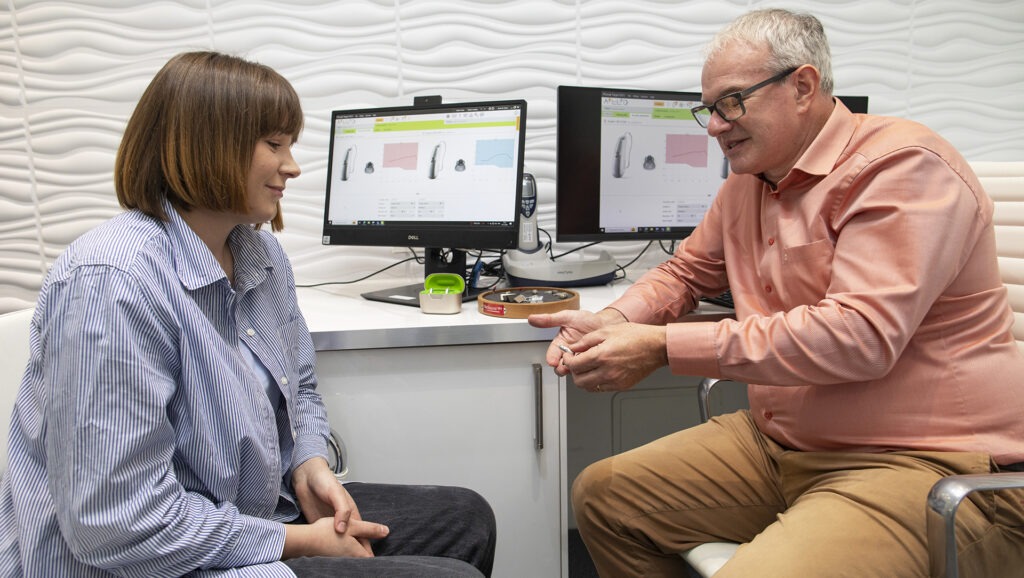
Once the tests are complete, your audiologist will sit with you and explain your results in plain terms. They will show you your audiogram, describe what it means for hearing in everyday situations, and, if any degree of hearing loss is present, discuss all available options clearly and without pressure.
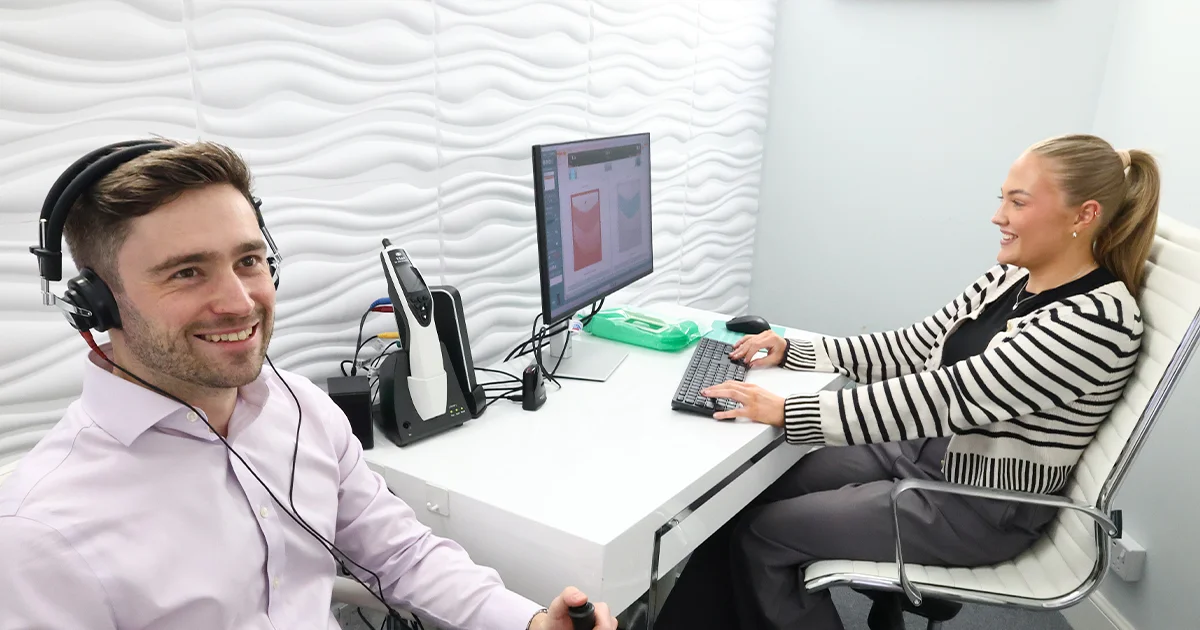
Anyone who has noticed a change in their hearing, at any age should have a hearing test.
How to Read Your Audiogram and Understand Your Results
An audiogram can look a little baffling at first glance. Once you understand what the two axes represent, it becomes much more readable.
The horizontal axis shows frequency, measured in Hertz, from low pitched sounds on the left to high pitched sounds on the right.
The frequencies most critical for speech understanding usually sit between 500 Hz and 4,000 Hz. The vertical axis shows volume or intensity, measured in decibels hearing level.
Normal hearing thresholds sit between 0 and 25 dB HL near the top of the graph. The further down your results appear, the louder sounds need to be before you can detect them.
| Hearing level | Classification and what it typically means |
|---|---|
| 0 to 25 dB HL | Normal hearing. No clinically significant difficulty with everyday sounds or speech. |
| 26 to 40 dB HL | Mild hearing loss. You may miss quiet speech or conversation at a distance. Background noise makes things harder. |
| 41 to 55 dB HL | Moderate hearing loss. Regular difficulty following conversation without visual cues. Television volume often needs to be higher. |
| 56 to 70 dB HL | Moderately severe hearing loss. Significant difficulty even in quiet settings. Hearing aids are strongly recommended. |
| 71 to 90 dB HL | Severe hearing loss. Only very loud sounds are heard without hearing aids. Hearing aids are essential. |
| Over 90 dB HL | Profound hearing loss. Very limited hearing even with conventional aids. Cochlear implant assessment may be considered. |
Clinical context matters
The same audiogram can affect two people very differently. A mild hearing loss may be barely noticeable for someone who works quietly at home but significantly disabling for someone who teaches in a classroom or works in a call centre. Your audiologist should interpret your results in the context of your occupation, lifestyle and communication needs, not just against a number on a chart.
The Three Types of Hearing Loss
Sensorineural Hearing Loss
Sensorineural hearing loss is the most common form of adult hearing impairment. It occurs when the delicate hair cells of the cochlea or the auditory nerve sustain damage, usually gradually and irreversibly.
The most frequent cause is the natural ageing process, though prolonged noise exposure, some viral infections and certain medicines can also be responsible.
Because sensorineural hearing loss cannot generally be corrected surgically or medically, the word permanent can be discouraging. It should not be.
Modern digital hearing aids are highly effective at managing sensorineural loss, and for most people they bring a significant improvement in communication and quality of life.
Conductive Hearing Loss
Conductive hearing loss occurs when something physical is preventing sound from travelling efficiently through the outer or middle ear to the inner ear.
Common causes include impacted earwax, fluid in the middle ear, ear infections, a perforated eardrum, or problems with the tiny bones that carry sound vibrations.
The important distinction is that conductive hearing loss is frequently treatable. Earwax removal, treatment for infection, a minor procedure to drain fluid, or repair of a perforated eardrum can restore normal hearing in many cases.
Mixed Hearing Loss
Mixed hearing loss combines elements of sensorineural and conductive loss. There is both an inner ear component and an outer or middle ear problem contributing to the overall hearing difficulty.
Treatment usually addresses the conductive element first before the sensorineural component is managed with hearing aids or other rehabilitation.
NHS vs Private Hearing Test Near You
When people search for a hearing test near me, one of the first decisions they face is whether to go via the NHS or choose a private audiology clinic. Both routes have genuine merit. The best choice depends on your circumstances, urgency, budget and the level of follow up you want.
Private Audiology Clinics
Independent private audiologists and specialist audiology practices usually offer short waiting times, often within a week and sometimes within days. Appointment times are usually longer than many screening appointments, allowing a fuller assessment and a more detailed discussion of results.
- No GP referral required.
- Short waiting times.
- Longer appointment times and more detailed results discussion.
- Independent advice, ideally not tied to a single manufacturer range.
- Continuity of care with the same audiologist.
- Wider choice of hearing aid technology, styles and brands.
- Home visit services may be available for people with mobility difficulties.
NHS Audiology
NHS audiology services provide free, clinically excellent hearing assessments for adults following referral by a GP. NHS hearing aids are fully digital and supplied free of charge if clinically indicated. The main consideration is waiting time, which varies by location.
What to Look for When Choosing a Private Audiologist
- HCPC registration, which is a legal requirement for practising hearing aid dispensers in the UK.
- Membership of the British Academy of Audiology, British Society of Audiology, BSHAA or MSHAA.
- A purpose built, sound treated testing environment.
- Clear explanation of your results and all available options.
- Transparent pricing and no obligation to purchase following assessment.
- Aftercare and follow up appointments provided as standard.
Our audiology team
All audiologists at Fairfield Hearing are registered with the Health and Care Professions Council and hold appropriate professional memberships.
Every hearing assessment follows recognised professional procedures. You will always receive clear results, practical next steps and time to ask questions.
How Long Does a Hearing Test Take?
A full professional hearing assessment usually takes between 45 minutes and one hour.
That includes case history, otoscopy, pure tone audiometry, bone conduction testing, speech testing, tympanometry, results discussion and next step advice.
Shorter appointments of 15 to 20 minutes are screening checks rather than full clinical assessments.
They can be a useful first step, but they do not provide the depth of information required for confident clinical decision making.
If you have specific concerns about your hearing, ask explicitly for a full audiological assessment.
How Often Should You Have a Hearing Test?
- Adults under 50 with no concerns or risk factors: every three to five years.
- Adults aged 50 and over: annually.
- Anyone working in a noisy environment: annually as a minimum.
- Anyone who has noticed a change in hearing: promptly.
- Anyone with tinnitus: as soon as possible, to establish a baseline.
- Anyone with a family history of early or significant hearing loss: every one to two years.
How to Prepare for Your Hearing Test
There is genuinely very little preparation involved, which is one of the things that makes a hearing assessment so straightforward to arrange.
A few simple steps will help ensure your results are as accurate and useful as possible.
- Avoid loud noise for at least 16 hours before your appointment.
- If you suspect earwax blockage, mention it when you book.
- Bring a list of medicines you currently take.
- Think about the situations where hearing is most difficult.
- Consider bringing a family member or trusted friend.
- If you currently wear hearing aids, bring them with you.
Hearing Health and Linked Conditions
Age Related Hearing Loss
Age related hearing loss is the single most common cause of hearing impairment in adults in the UK.
It develops gradually as the hair cells within the cochlea deteriorate with age, usually affecting high frequency hearing first.
The practical effect is that speech remains audible but becomes less clear.
Hearing Loss and Cognitive Health
The link between untreated hearing loss and cognitive health is one of the most important areas of hearing science.
When hearing becomes impaired, the brain must dedicate more resource to processing and interpreting speech.
This does not mean that a hearing aid prevents dementia. It does mean that treating hearing loss early may support communication, social connection and long term wellbeing.
Tinnitus and Hearing Assessment
Tinnitus is the perception of sound within the ears or head when no external sound is present.
It is closely associated with changes in the auditory system and frequently accompanies hearing loss.
Anyone experiencing tinnitus should have a professional hearing assessment because there may be an identifiable underlying cause, and because a baseline is valuable for future monitoring.
Sudden Hearing Loss
Sudden sensorineural hearing loss is a rapid reduction in hearing, usually in one ear, over a short period.
It requires urgent medical assessment. Symptoms that should prompt immediate help include sudden hearing change, sudden fullness in one ear, new one sided tinnitus, dizziness or balance disturbance alongside hearing change.
After Your Hearing Test: Treatment Options Explained
The outcome of your hearing assessment determines the most appropriate next step.
A good audiologist will not recommend treatment that is not clinically indicated, and they will explain why they are suggesting what they suggest.
No action required
If your results show normal hearing, you leave reassured with a clear recommendation for your next routine check.
Earwax removal
If wax is the cause, professional removal can often restore hearing immediately.
Medical referral
If signs of medical concern appear, your audiologist will advise GP or ENT referral.
Hearing Aids
For sensorineural hearing loss that cannot be managed medically, modern digital hearing aids are the most effective and well evidenced management option available.
Current technology can include Bluetooth streaming, rechargeable batteries, adaptive microphones, app based control, AI powered processing and discreet receiver in canal or invisible in canal styles.
Your audiologist should demonstrate suitable options and explain the likely benefit, limits, costs and aftercare.
In most private settings, you should also have a trial period so you can experience the benefit in real life before making a final decision.
Assistive Listening Technology and Rehabilitation
Hearing aids are not the only form of support. Television systems, phone accessories, alerting devices and communication strategy training can all improve outcomes, especially when family members are included in the conversation.
Hearing Tests for Children
Hearing problems in children can affect speech and language development, learning and social confidence.
They can develop at any stage, not only in infancy. The NHS Newborn Hearing Screening Programme tests babies soon after birth, but conditions such as glue ear are particularly common in young children and may not appear until toddler or school age.
- Not responding consistently to sounds, voices or their name.
- Delayed speech and language development.
- Asking for things to be repeated frequently.
- Difficulty following instructions or poor performance at school.
- Speaking unusually loudly.
- Turning up television or device volume.
- A change in behaviour or social engagement.
If you are concerned about a child, speak to your GP or health visitor, who can arrange referral to a paediatric audiology service.
How Much Does a Hearing Test Cost in the UK?
| Setting | Hearing test cost | Hearing aid provision |
|---|---|---|
| NHS via GP referral | Free | Free digital hearing aids if clinically indicated. |
| Independent private audiologist | Usually free | Wide range, typically £500 to £3,500 or more per device. |
| Fairfield Hearing | Free | Range of devices at various price points. |
| Private hospital audiology | £80 to £120 consultation | Varies, specialist range available. |
| Home visit audiologist | Usually free or low cost | Full range, ideal for those with mobility needs. |
Always confirm what is included in a free hearing test before you attend.
A full audiological assessment and a brief screening check are not the same thing. Ask whether the appointment includes pure tone audiometry, tympanometry and a full results discussion before you book.
Frequently Asked Questions About Hearing Tests
Do I need a GP referral for a hearing test?
No, not for a private hearing assessment.
You can book directly with a private audiology clinic or independent audiologist.
For NHS audiology, a GP referral is usually required, although some areas offer self referral pathways.
Is a hearing test painful or uncomfortable?
No. A professional hearing assessment is non invasive and painless.
The tests involve sitting comfortably, wearing headphones and pressing a button when you hear sounds, alongside a brief examination of your ears.
How accurate is an online hearing test?
Online hearing screeners can be a useful prompt to seek advice, but they are not a diagnosis.
They are affected by headphone quality, background noise and device settings, and they cannot examine your ears or assess middle ear function.
Can hearing loss be reversed?
It depends on the type.
Conductive hearing loss caused by earwax, infection or fluid can often be resolved with appropriate treatment.
Sensorineural hearing loss is generally permanent, but it is usually managed very effectively with modern hearing aids.
Sudden sensorineural hearing loss may recover partially or fully if treated promptly.
>What is the difference between a hearing test and an audiology test?
In everyday language, the terms are often used interchangeably.
Audiology test is the more formal clinical term and may include specialist measures in addition to the standard hearing assessment, depending on clinical need.
How long does a hearing test last?
A full hearing assessment usually takes 45 minutes to one hour.
Brief screening checks may take 15 to 20 minutes, but they do not provide the same clinical depth.
At what age should regular hearing tests begin?
If you have concerns at any age, book promptly.
As a general preventive measure, routine annual hearing assessments are sensible from the age of 50 onwards, since age related hearing changes often begin around this time.
People working in noisy environments should test annually regardless of age.
Related Guides and Services
| Related page | What you will find there |
|---|---|
| Book a Hearing Test | Reserve an appointment with an HCPC registered audiologist, with no referral needed. |
| Hearing Aids | A full guide to modern digital hearing aid technology, styles and what to expect from a fitting. |
| Ear Wax Removal | Microsuction, irrigation and manual removal explained. |
| Signs of Hearing Loss | A more detailed guide to recognising early and later stage hearing loss symptoms. |
| Sudden Hearing Loss | When to treat hearing loss as a medical emergency and what the treatment pathway involves. |
| Age Related Hearing Loss | Causes, progression and evidence based management options. |
| Hearing Loss and Cognitive Health | The research evidence linking untreated hearing loss and cognitive decline. |
| Hearing Loss and Tinnitus | Understanding the relationship between the two conditions and what can be done. |
Ready to take the first step?
A hearing test is one of the most straightforward and valuable things you can do for your health.
HCPC registered audiologists are available for appointments within days, with no GP referral needed, no pressure and no obligation.
Book online today or call to speak to the audiology team.
Written by a qualified HCPC registered audiologist
BSc (Hons) Audiology
-
BSc (Hons) Audiology (2012) | HCPC Registered Hearing Aid Dispenser (HAD01925) | Member, British Academy of Audiology (BAA) | Specialist in paediatric hearing assessment
Sophie Halliday is a qualified audiologist with clinical experience in NHS and private audiology settings.
Sophie joined Fairfield Hearing in Edinburgh as a trainee in 2022 and qualified as an audiologist on 15 July 2025, following a Hearing Aid Dispensing qualification at Queen Margaret University.
She is registered with the Health and Care Professions Council (HCPC) and is a member of the British Academy of Audiology (BAA). Sophie’s day-to-day clinical work spans hearing assessments, ear wax removal, and patient aftercare at both Fairfield Hearing clinics in Edinburgh.
HCPC: HAD006099 | Verify at hcpc-uk.org | Page written: April 2026 | Next content review: October 2026 | View Sophie’s full profile
✔ Clinically reviewed and approved

-
BSc (Hons) Clinical Audiology, Manchester 1989 | HCPC HAD00366 | 35+ years Edinburgh practice | Former Chair, AIHHP
This guide has been clinically reviewed for medical accuracy by Stephen Fairfield, a Consultant audiologist and Fairfield Hearing Edinburgh founder.
Stephen has served with various industry and university bodies to develop the profession, chairing the Association of Independent Hearing Healthcare Professionals, and sitting on the Scottish Executive Advisory Board and Queen Margaret University Audiology Group.of clinical practice in otology and hearing disorders.
Clinical claims and treatment information have been reviewed against current NHS, NICE and professional audiology guidance.
BOOK A SPECIALIST HEARING AID ASSESSMENT IN EDINBURGH
Call 0131 378 5800 or visit fairfieldhearing.health/what-we-do/hearing-aids. Whether you’re trying hearing aids for the first time or coming to us after a disappointing experience elsewhere, we’ll spend the time needed to understand your situation and find the right path forward. No obligation and no pressure.
Contact Us